
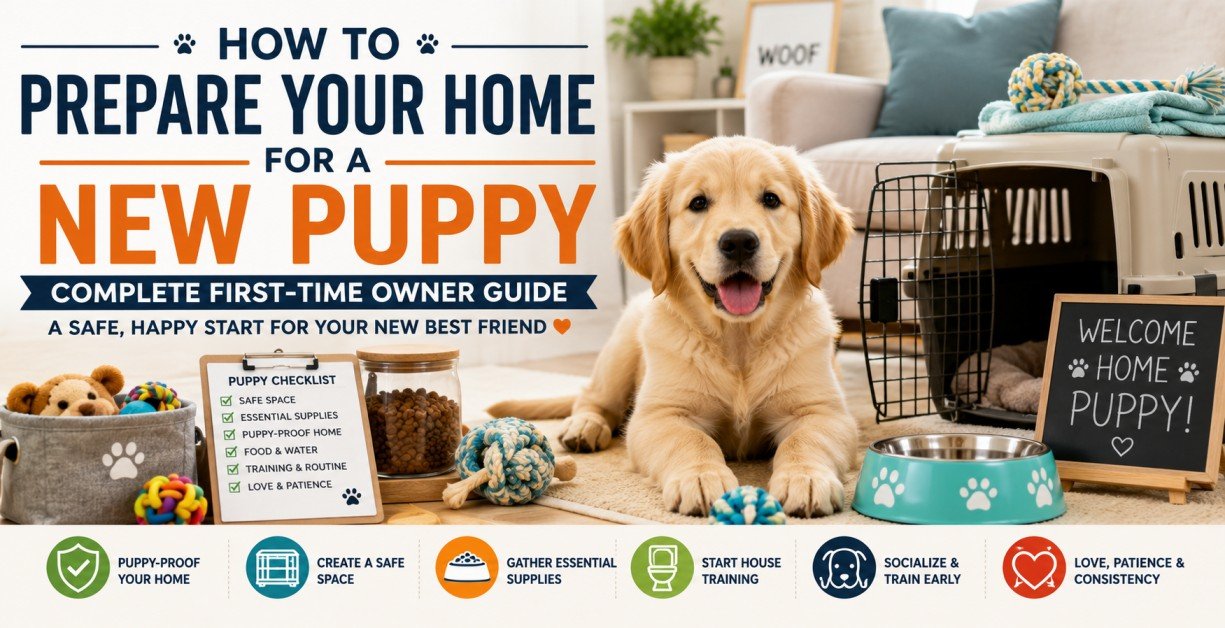
How to Prepare Your Home for a New Puppy: Complete First-Time Owner Guide
Bringing home a new puppy is one of life’s most exciting experiences. Whether you’ve adopted from a shelter or welcomed a puppy from a responsible breeder, your new companion is about to become an important part of your family. While it’s easy to focus on toys, treats, and adorable photos, preparing your home properly before your puppy arrives is one of the most important steps you can take.
Puppies are naturally curious and explore the world with their noses and mouths. Everyday household items that seem harmless to humans can quickly become dangerous for an energetic young dog. Creating a safe, welcoming environment not only protects your puppy but also makes the transition into its new home much smoother.
This guide covers everything first-time dog owners need to know before bringing a puppy home, from puppy-proofing every room to choosing the right supplies and helping your new pet adjust with confidence.
Why Preparing Your Home Matters
The first few days in a new home can be overwhelming for any puppy. Everything is unfamiliar, from the smells and sounds to the people and surroundings. A well-prepared home reduces stress and allows your puppy to feel secure while learning new routines.
Proper preparation also prevents accidents, protects valuable belongings, and reduces the risk of injuries caused by electrical cords, cleaning products, sharp objects, or unsafe furniture.
The more comfortable your puppy feels during the first week, the easier it will be to build trust and establish good habits that last a lifetime.
Create a Safe Space for Your Puppy
Every puppy needs a quiet place where it can rest without being disturbed. This space should include a comfortable bed, fresh water, soft blankets, and a crate if you plan to crate train.
A crate should never be used as punishment. Instead, it should become a positive, comfortable place where your puppy feels safe. Many dogs naturally view their crate as their personal bedroom, helping with house training and reducing anxiety when left alone for short periods.
Choose an area away from loud televisions, busy hallways, or constant foot traffic so your puppy can rest peacefully.
Puppy-Proof Every Room
Puppies love exploring, which means they’ll investigate almost everything within reach. Electrical cords should be secured or covered to prevent chewing. Cleaning products, medicines, detergents, pesticides, and other chemicals should always be stored inside locked cabinets.
Remove small objects such as coins, batteries, rubber bands, children’s toys, and decorative items that could become choking hazards. Secure trash bins with lids because many puppies enjoy searching through garbage for interesting smells.
Houseplants should also be checked carefully, as several common indoor plants are toxic to dogs. If you’re unsure whether a plant is safe, place it well out of your puppy’s reach until you can confirm.
Choose the Right Food and Water Bowls
Your puppy will need sturdy food and water bowls that are easy to clean. Stainless steel bowls are often recommended because they are durable, hygienic, and resistant to bacteria.
Maintain a consistent feeding schedule using high-quality puppy food recommended by your veterinarian. Avoid frequently changing foods during the first few weeks, as sudden dietary changes can upset your puppy’s digestive system.
Fresh, clean drinking water should always be available throughout the day.
Buy Essential Puppy Supplies Before Arrival
Having the necessary supplies ready before bringing your puppy home helps avoid unnecessary stress during those first exciting days.
A comfortable bed, appropriately sized crate, collar, identification tag, leash, food and water bowls, grooming brush, nail clippers, puppy-safe shampoo, chew toys, interactive toys, training treats, waste bags, and puppy food should all be purchased in advance.
Interactive toys are especially helpful because they provide mental stimulation while reducing boredom and destructive chewing.
Make Your Backyard Safe
If your puppy will spend time outdoors, inspect your yard carefully before allowing free access.
Check that fences are secure and free from gaps where a curious puppy might escape. Remove sharp tools, toxic plants, fertilizers, pesticides, and standing water. Ensure gates close properly and supervise outdoor play until your puppy becomes familiar with its surroundings.
Young puppies should never be left alone outside for extended periods.
Prepare Family Members
Everyone living in the home should understand how to interact with the new puppy. Children should learn to handle the puppy gently, avoid disturbing it while eating or sleeping, and respect its personal space.
Consistency is essential. Decide in advance where the puppy will sleep, whether it will be allowed on furniture, and which commands everyone will use during training. When every family member follows the same rules, puppies learn much more quickly.
Start House Training Immediately
House training begins the moment your puppy arrives home.
Take your puppy outside frequently, especially after eating, drinking, playing, waking up, or napping. Reward successful bathroom breaks with praise and treats so your puppy begins associating outdoor toileting with positive experiences.
Accidents are normal during the learning process. Avoid punishment, as it may create fear rather than understanding. Patience and consistency produce the best long-term results.
Establish a Daily Routine
Dogs thrive on predictable schedules. Feeding, walks, playtime, training sessions, and bedtime should occur at roughly the same times every day.
A consistent routine helps puppies feel secure while making house training and obedience training much easier. Puppies quickly learn what to expect, reducing anxiety and encouraging positive behavior.
Begin Socialization Early
Proper socialization is one of the most important parts of raising a confident, well-behaved dog.
After consulting your veterinarian regarding vaccinations, gradually introduce your puppy to different people, environments, sounds, and experiences in a safe, controlled manner.
Positive early experiences help reduce fear and behavioral problems later in life while encouraging confidence in new situations.
Schedule Your First Veterinary Visit
One of your first priorities should be scheduling a comprehensive veterinary examination.
Your veterinarian will assess your puppy’s overall health, discuss vaccinations, parasite prevention, nutrition, growth milestones, and answer any questions you have as a first-time owner.
Regular checkups establish a strong foundation for lifelong preventive healthcare.
Be Patient During the Adjustment Period
Every puppy adapts at its own pace. Some settle into their new home within a day or two, while others need several weeks before feeling completely comfortable.
It’s normal for puppies to cry during the first few nights, especially after leaving their mother and littermates. Gentle reassurance, a consistent bedtime routine, and plenty of positive interaction help them adjust more quickly.
Building trust takes time, and patience is one of the greatest gifts you can give your new companion.
Common Mistakes First-Time Puppy Owners Make
Many first-time owners accidentally reinforce unwanted behaviors without realizing it. Allowing puppies to chew shoes, jump on people, or ignore basic commands during the early months often creates habits that become difficult to change later.
Skipping socialization, delaying training, feeding table scraps, using punishment instead of positive reinforcement, or leaving puppies unsupervised for long periods can all contribute to behavioral challenges.
Starting with clear expectations, gentle guidance, and consistent routines creates a happier relationship for both you and your puppy.
Final Thoughts
Preparing your home before bringing a new puppy home is one of the best investments you can make in your pet’s future. A safe environment, proper supplies, consistent routines, early training, and regular veterinary care all contribute to raising a healthy, confident, and well-behaved dog.
The first few weeks are about much more than settling in—they’re the foundation for a lifetime of companionship. By planning ahead and understanding your puppy’s needs, you’ll create a loving home where your newest family member can thrive.
Remember, every puppy learns at its own pace. With patience, consistency, and plenty of affection, you’ll soon enjoy the incredible bond that makes dog ownership so rewarding.
Frequently Asked Question (FAQs)
What should I buy before bringing a puppy home?
You’ll need a crate, bed, food and water bowls, puppy food, collar, leash, ID tag, chew toys, grooming supplies, training treats, and cleaning products for accidents.
How do I puppy-proof my house?
Secure electrical cords, remove toxic plants, store chemicals safely, keep small objects out of reach, and block access to dangerous areas.
Should a puppy sleep in a crate?
Yes. A properly introduced crate provides a safe, comfortable space and can make house training easier
When should I take my new puppy to the veterinarian?
Ideally within the first few days after bringing your puppy home to ensure it’s healthy and to discuss vaccinations, nutrition, and preventive care.
How long does it take a puppy to adjust to a new home?
Most puppies begin feeling comfortable within one to three weeks, although some may need more time depending on their personality and previous experiences.