15 Human Foods That Are Safe for Dogs (And 15 That Are Dangerous)
As a dog owner, you’ve probably looked into those pleading eyes while enjoying a meal and wondered, “Can my dog eat this?” Dogs are naturally curious and often eager to share whatever is on your plate. While some human foods are perfectly safe and even nutritious for dogs, others can cause serious health problems, including poisoning and organ damage.
Knowing the difference between safe and dangerous foods is one of the easiest ways to protect your dog’s health. This guide explains which human foods dogs can enjoy in moderation, which foods should never be offered, and what to do if your dog accidentally eats something toxic.
Can Dogs Eat Human Food?
Yes, many human foods are safe for dogs when served in appropriate portions and prepared correctly. Fresh fruits, vegetables, lean proteins, and certain grains can provide valuable nutrients that support your dog’s overall health.
However, dogs have different digestive systems than humans. Foods that are harmless to us can sometimes be extremely toxic to them. The key is understanding which foods are beneficial and which should always stay off the menu.
Human Foods That Are Safe for Dogs
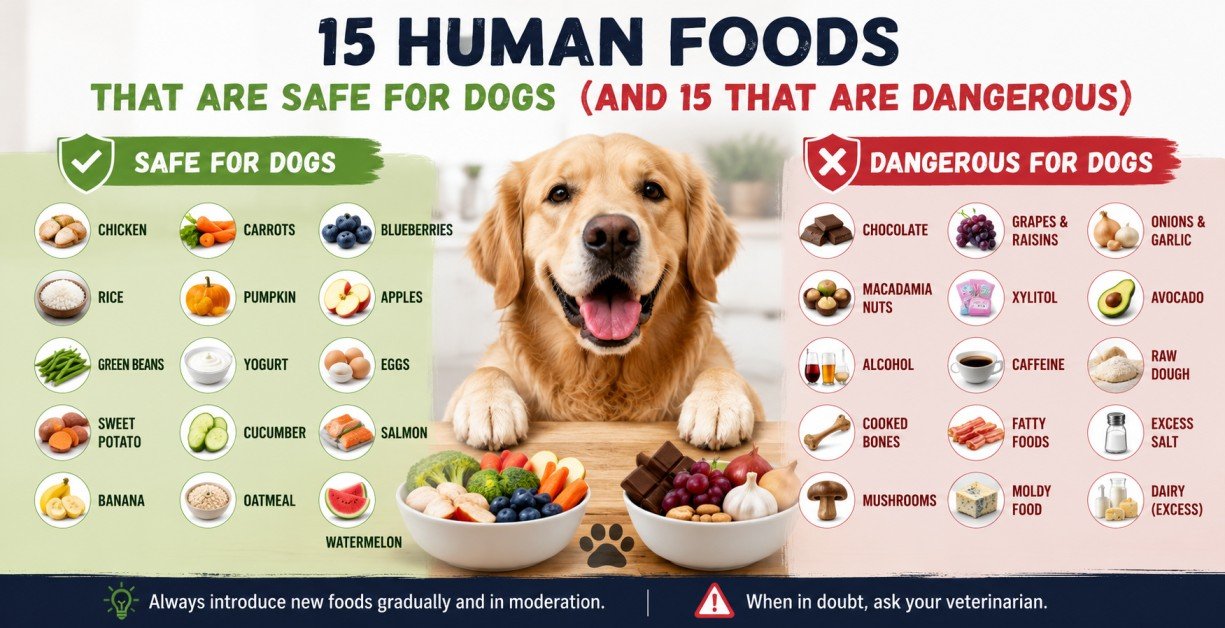
Several everyday foods can make healthy treats when given occasionally. Plain cooked chicken is one of the best options because it provides high-quality protein that’s easy to digest. Cooked turkey without seasoning or skin is another excellent choice for most dogs.
Cooked salmon offers beneficial omega-3 fatty acids that promote healthy skin, a shiny coat, and joint health. Eggs are another nutritious addition, supplying protein, vitamins, and essential minerals when fully cooked.
Plain white rice and cooked oatmeal are gentle on the digestive system and are often recommended during episodes of mild stomach upset. Sweet potatoes are rich in fiber, vitamin A, and antioxidants, making them a healthy occasional treat.
Carrots are low in calories and naturally crunchy, helping support dental health while providing beta-carotene. Green beans are packed with vitamins and fiber, making them an excellent snack for overweight dogs.
Pumpkin is widely recommended by veterinarians because it supports healthy digestion and may help with both diarrhea and constipation when served plain without added sugar or spices.
Apples, after removing the seeds and core, provide vitamins A and C along with dietary fiber. Bananas offer potassium and vitamin B6, although they should be fed in moderation due to their natural sugar content.
Blueberries are rich in antioxidants that support healthy aging and immune function. Watermelon can be a refreshing summer snack after removing the seeds and rind, while cucumber provides hydration with very few calories.
Plain, unsweetened yogurt may benefit some dogs because it contains calcium and probiotics that support digestive health. However, dogs that are lactose intolerant should avoid dairy products.
Although these foods are generally considered safe, treats should make up no more than ten percent of your dog’s daily calorie intake.
Human Foods That Are Dangerous for Dogs
Some foods that are completely harmless to humans can become life-threatening for dogs.
Chocolate is one of the most well-known toxic foods. It contains theobromine and caffeine, both of which dogs cannot process efficiently. Even small amounts, especially dark chocolate, can cause vomiting, seizures, heart problems, and death.
Grapes and raisins remain one of the biggest mysteries in veterinary medicine because researchers still don’t know exactly why they are toxic. Even a few grapes may trigger sudden kidney failure in some dogs.
Onions, garlic, leeks, and chives belong to the allium family and can damage red blood cells, leading to anemia. These foods are dangerous whether they are raw, cooked, powdered, or dehydrated.
Xylitol, an artificial sweetener found in sugar-free gum, candies, baked goods, and peanut butter, causes a rapid drop in blood sugar and can result in liver failure within hours.
Macadamia nuts may cause weakness, tremors, vomiting, fever, and difficulty walking. Although symptoms often improve with treatment, they should never be offered to dogs.
Alcohol is highly toxic because dogs absorb it much faster than humans. Even small amounts can lead to breathing difficulties, coma, or death.
Caffeinated beverages such as coffee, tea, and energy drinks stimulate the nervous system and heart, increasing the risk of tremors and seizures.
Raw bread dough containing yeast continues expanding inside the stomach, causing painful bloating while producing alcohol during fermentation.
Avocados contain persin, which may cause digestive upset in dogs, particularly when consumed in large amounts.
Cooked bones are another common hazard because they can splinter easily, causing choking, intestinal blockages, or internal injuries.
Fatty foods such as bacon, sausage, fried chicken, and greasy leftovers increase the risk of pancreatitis, a painful and potentially life-threatening condition.
Moldy food should never be offered because certain molds produce toxins that affect the nervous system.
Excess salt may cause sodium poisoning, leading to excessive thirst, vomiting, tremors, seizures, and severe dehydration.
Certain mushrooms growing outdoors can also be poisonous, causing liver failure, neurological symptoms, or gastrointestinal illness.
Finally, excessive dairy products may upset the stomach of lactose-intolerant dogs, resulting in diarrhea and digestive discomfort.
What Should You Do If Your Dog Eats Something Toxic?
If you believe your dog has eaten a dangerous food, remain calm but act quickly. Try to identify exactly what was eaten, estimate the amount, and note the time of ingestion.
Do not attempt home remedies or induce vomiting unless specifically instructed by a veterinarian, as some substances can cause additional damage when brought back up.
Contact your veterinarian immediately if your dog has consumed chocolate, grapes, raisins, xylitol, onions, garlic, alcohol, or any other known toxic food. Prompt treatment significantly improves the chances of a full recovery.
How to Prevent Food Poisoning in Dogs
Preventing accidental poisoning is much easier than treating it. Keep toxic foods stored securely out of your dog’s reach, including kitchen counters and dining tables. Inform children and guests about foods that should never be shared with pets.
Always check ingredient labels before offering packaged foods, especially peanut butter, baked goods, and sugar-free products that may contain xylitol.
Providing healthy dog treats and a balanced commercial diet reduces begging behavior and helps ensure your dog receives complete nutrition.
Healthy Treat Alternatives
Instead of sharing leftovers from your dinner plate, consider healthier alternatives that are both safe and nutritious. Fresh carrot sticks, cucumber slices, apple pieces without seeds, blueberries, cooked pumpkin, plain boiled chicken, or green beans make excellent occasional rewards.
Choosing healthy treats helps maintain a healthy body weight while reducing the risk of digestive upset and food-related illnesses.
When Should You Visit a Veterinarian?
Immediate veterinary attention is necessary if your dog has eaten a known toxic food or develops symptoms such as repeated vomiting, diarrhea, excessive drooling, weakness, tremors, seizures, collapse, difficulty breathing, abdominal pain, or unusual behavior after eating.
Even if your dog appears normal, some toxins take several hours to produce symptoms. Early medical intervention often prevents serious complications.
Final Thoughts
Sharing food with your dog can be a wonderful way to strengthen your bond, but knowing what is safe is essential for protecting your pet’s health. While nutritious foods like cooked chicken, carrots, pumpkin, blueberries, apples, and green beans can be healthy treats, dangerous foods such as chocolate, grapes, onions, garlic, xylitol, alcohol, and cooked bones should always be avoided.
Every dog is different, and some may have food allergies or medical conditions that require special dietary restrictions. Whenever you’re unsure whether a food is safe, it’s always best to consult your veterinarian before offering it to your furry companion.
Making informed choices today can help your dog enjoy a longer, healthier, and happier life.
Frequently Asked Question (FAQs)
Can dogs eat eggs?
Yes. Fully cooked eggs are a nutritious source of protein, vitamins, and healthy fats for most dogs.
Can dogs eat cheese?
Dogs can eat small amounts of plain cheese, but lactose-intolerant dogs may experience digestive upset.
Can dogs eat bananas?
Yes. Bananas are safe in moderation and provide potassium, vitamin B6, and dietary fiber.
Why are grapes toxic to dogs?
The exact reason remains unknown, but grapes and raisins can cause sudden kidney failure, even in small amounts.
What is the most dangerous human food for dogs?
Chocolate, xylitol, grapes, raisins, onions, garlic, alcohol, and macadamia nuts are among the most dangerous foods and require immediate veterinary attention if consumed.