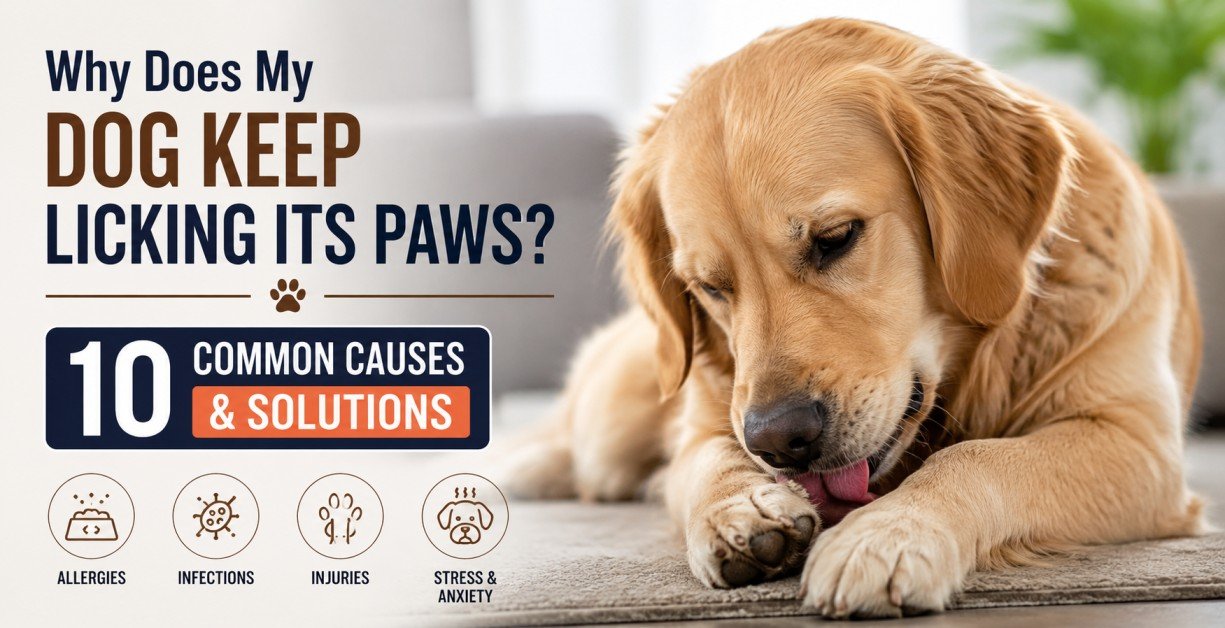
Why Does My Dog Keep Licking Its Paws? 10 Common Causes & Solutions
Dogs naturally groom themselves by licking different parts of their bodies, including their paws. Occasional paw licking is a normal behavior and usually nothing to worry about. However, if your dog keeps licking its paws throughout the day, especially to the point where the skin becomes red, swollen, or irritated, it could be a sign of an underlying health issue. Excessive paw licking is often your dog’s way of telling you that something is causing discomfort.
In this guide, we’ll explore the most common reasons why dogs lick their paws excessively, how to identify the underlying cause, and what you can do to help your furry companion feel comfortable again.
Is It Normal for Dogs to Lick Their Paws?
A small amount of paw licking is completely normal. Dogs often clean dirt, dust, or small debris from their paws after walks or outdoor play. They may also lick briefly before settling down to sleep as part of their regular grooming routine.
The problem begins when the licking becomes frequent, obsessive, or focused on one particular paw. If you notice your dog licking for long periods every day or waking up at night to lick its paws, it’s time to investigate the cause.
Allergies Are One of the Most Common Causes
Environmental and food allergies are among the leading reasons dogs develop itchy paws. Grass pollen, dust mites, mold, weeds, and household cleaning products can trigger allergic reactions. Some dogs are also allergic to specific proteins found in their food, such as chicken, beef, dairy, or wheat.
When allergies occur, the skin becomes inflamed and itchy. Dogs often respond by licking and chewing their paws in an attempt to relieve the irritation. You may also notice red skin between the toes, frequent ear infections, watery eyes, or excessive scratching on other parts of the body.
Managing allergies usually involves identifying the trigger, maintaining good paw hygiene, and following your veterinarian’s treatment recommendations.
Dry Skin Can Make Paws Uncomfortable
Just like humans, dogs can develop dry, cracked skin, especially during winter or in dry climates. Walking on hot pavement, rough surfaces, or exposure to harsh chemicals can strip natural moisture from the paw pads.
Dry paws may appear rough, flaky, or cracked. Dogs often lick them repeatedly in an effort to soothe the discomfort. Regular use of veterinarian-approved paw balms and avoiding hot surfaces can help keep paw pads healthy.
Injuries and Foreign Objects
Sometimes the cause is as simple as a small injury. Tiny stones, grass seeds, splinters, thorns, or broken nails can become lodged between your dog’s toes. Even a minor cut or abrasion can cause persistent licking.
Carefully inspect your dog’s paws after walks. Check between the toes, around the nails, and underneath the paw pads. If you notice swelling, bleeding, or a foreign object that cannot be safely removed, seek veterinary care promptly.
Bacterial or Fungal Infections
Constant moisture from excessive licking creates the perfect environment for bacteria and yeast to multiply. Once an infection develops, the itching often becomes even worse, creating a frustrating cycle.
Signs of infection include redness, swelling, an unpleasant odor, brown saliva stains, discharge, or thickened skin around the paws. Veterinary treatment may include medicated shampoos, topical creams, or oral medications depending on the severity of the infection.
Parasites May Be the Hidden Problem
Fleas, ticks, and mites can cause intense itching around the paws and other parts of the body. Even a single flea bite may trigger a severe allergic reaction in sensitive dogs.
Regular parasite prevention throughout the year is one of the most effective ways to protect your dog from unnecessary discomfort and prevent excessive scratching and licking.
Anxiety and Stress Can Trigger Excessive Licking
Not all paw licking is caused by physical problems. Some dogs develop compulsive licking behaviors due to boredom, separation anxiety, loneliness, or stress.
Dogs left alone for long hours or those with insufficient mental stimulation may repeatedly lick their paws as a self-soothing behavior. Increasing exercise, providing puzzle toys, interactive play sessions, and maintaining a consistent daily routine can often reduce stress-related licking.
Joint Pain and Arthritis
Older dogs sometimes lick the paw or leg nearest a painful joint. Arthritis, ligament injuries, or muscle strain can cause discomfort that dogs attempt to relieve through licking.
If your senior dog has difficulty standing, climbing stairs, or appears stiff after resting, excessive paw licking could be associated with joint pain rather than a skin problem.
Burns from Hot Pavement
During summer, asphalt and concrete surfaces can become extremely hot. Walking on overheated pavement may burn paw pads, leading to pain and repeated licking.
If the ground feels too hot for your hand after a few seconds, it is also too hot for your dog’s paws. Walking during cooler morning or evening hours can help prevent heat-related injuries.
Chemical Irritants Around the Home
Floor cleaners, lawn fertilizers, de-icing salts, and certain garden chemicals may irritate sensitive paw pads. After walking on treated surfaces, dogs often lick their paws to remove the irritating substance.
Wiping your dog’s paws with a damp cloth after outdoor walks helps remove allergens, dirt, and chemical residues before they cause irritation.
Overgrown Nails Can Affect Walking
Long nails change the way a dog walks and place extra pressure on the toes and paw joints. This discomfort may encourage constant licking.
Routine nail trimming is an important part of overall paw care and helps maintain proper posture and comfort.
How to Help Your Dog Stop Licking Its Paws
The first step is identifying the underlying cause rather than simply trying to stop the licking itself. Examine your dog’s paws daily for cuts, swelling, redness, or foreign objects. Keep the paws clean and dry after walks, especially during rainy weather. Use only veterinarian-approved paw moisturizers if dryness is present, and ensure your dog receives regular parasite prevention.
Providing enough physical exercise and mental enrichment can also reduce boredom-related licking. If allergies are suspected, your veterinarian may recommend dietary changes, allergy testing, or medications to control inflammation.
When Should You Visit a Veterinarian?
While occasional licking is harmless, persistent licking should never be ignored. Veterinary attention is recommended if your dog continues licking for several days, develops bleeding or open sores, shows signs of infection, limps, has swollen paws, or appears to be in pain.
Early diagnosis often prevents minor issues from becoming more serious and helps your dog recover more quickly.
Preventing Future Paw Problems
Healthy paws play an important role in your dog’s overall well-being. Regular grooming, routine nail trimming, checking paws after every walk, avoiding hot pavement, maintaining parasite protection, feeding a balanced diet, and scheduling regular veterinary checkups all contribute to long-term paw health.
Paying attention to small behavioral changes, such as increased paw licking, allows pet owners to identify potential health problems before they become severe.
Final Thoughts
Excessive paw licking is more than just a grooming habit. It is often a sign that your dog is experiencing discomfort caused by allergies, infections, injuries, parasites, dry skin, anxiety, or joint pain. Understanding the possible causes and responding early can prevent complications and keep your dog comfortable, active, and happy.
If your dog’s paw licking becomes persistent or is accompanied by redness, swelling, limping, or signs of pain, consult your veterinarian for a proper diagnosis and personalized treatment plan. Prompt care is the best way to protect your dog’s health and ensure those paws stay healthy for years to come.
Frequently Asked Question (FAQs)
Why does my dog keep licking only one paw?
Licking a single paw often indicates a localized problem such as an injury, splinter, insect bite, infection, or foreign object trapped between the toes.
Can food allergies cause paw licking?
Yes. Food allergies can trigger itchy skin and inflamed paws, causing dogs to lick them repeatedly.
Should I stop my dog from licking its paws?
Occasional licking is normal, but excessive licking should be investigated because it usually indicates an underlying issue rather than a behavioral habit.
How can I soothe my dog's itchy paws at home?
Cleaning the paws after walks, keeping them dry, using veterinarian-approved paw balms, and avoiding known irritants may help. Persistent itching should always be evaluated by a veterinarian.
Is excessive paw licking an emergency?
Not usually, but if your dog has severe swelling, bleeding, pus, difficulty walking, or signs of significant pain, seek veterinary care as soon as possible.